


The Ardent Mills guide to flour treatments:
An overview of options for improving flour performance
As CPG brands and food manufacturers optimize their products to succeed on shelf and win consumer loyalty, one of the primary factors impacting performance is how flour – when used as an ingredient, may or may not be treated.
Depending on the application, flour treatments provide important enhancements that can improve consistency, improve performance, reduce the risk of recalls and extend shelf life. And finding the optimal mix of treatments can be more complex than it may appear. Part food science, part response to consumer expectations, flour treatments are often essential to creating a high-quality, consistent portfolio of products.
Here, Ardent Mills is sharing a comprehensive look at five commonly used flour treatments that optimize appearance, accelerate aging and maturation, and/or help to maintain food safety across your product portfolio.
Bleaching
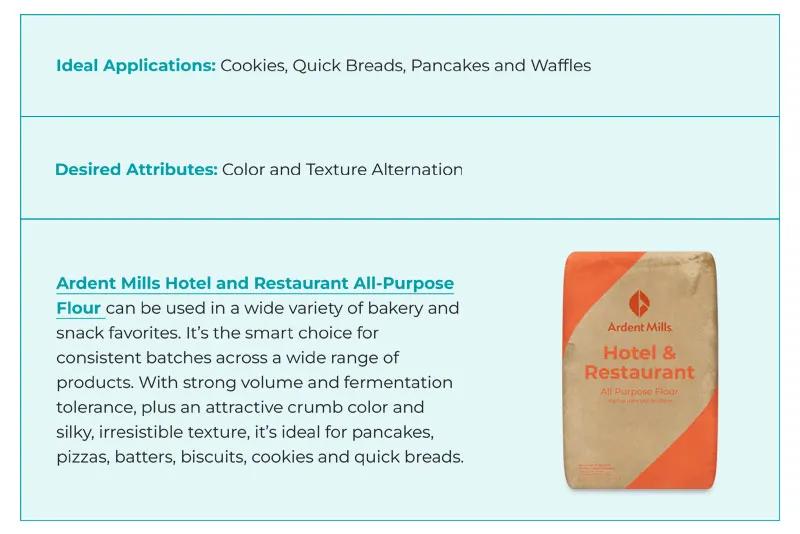
Bleached flour is chemically treated to speed up the aging process, resulting in a whiter color and finer texture. Chemicals like chlorine or benzoyl peroxide are used to break down pigments and alter the protein structure, creating a softer product. This is suitable for baked goods like cookies and cakes. Bleaching may also be achieved by adding chlorine gas to flour. In cake flour, adding chlorine results in improved volume and a finer crumb texture, as well as a reduction of flour pH. Chlorine can also be added in lesser amounts to cookie flour to control cookie spread during baking.
Maturing
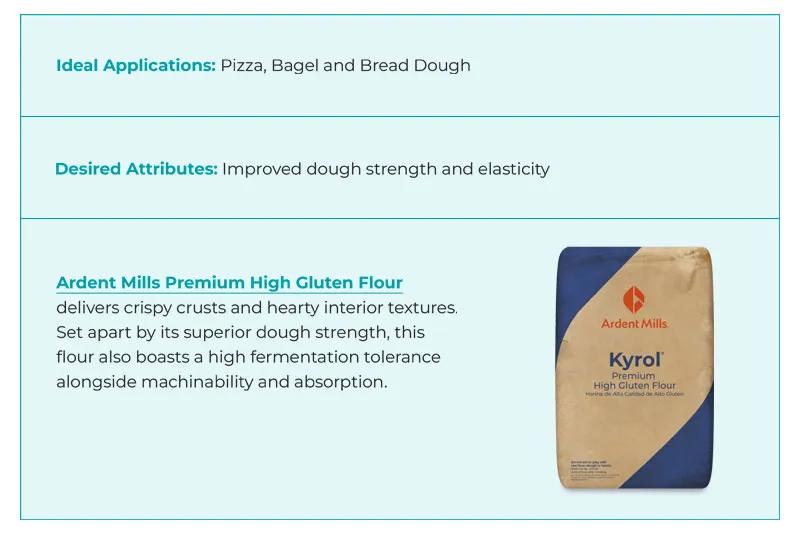
This treatment accelerates the natural aging of flour to improve dough strength and elasticity. Agents like ascorbic acid are added to help the dough retain gas, leading to a better final volume in flour for pizza, bagel, and bread doughs. It strengthens the flour's dough-forming ability, improving gas retention of the "sticky" gluten within the flour, and letting the product achieve a higher crust, finer grain, and chewier texture.
Malting
During the malting process, enzymes are added to supplement naturally occurring wheat enzymes. These enzymes convert starch into fermentable sugars, then yeast converts the sugars into carbon dioxide and alcohol during the fermentation process.
The resulting malted flour creates a more relaxed dough, which shortens mix times and adds browning characteristics that consumers love.
Enrichment
The process of enriching flour involves adding nutrients like B vitamins, iron and folic acid to refined flour. The process has no effect on baking performance, and it allows CPGs and manufacturers to give a nutritional boost to delicious, familiar products like frozen pizza and bakery aisle pastries.

Heat
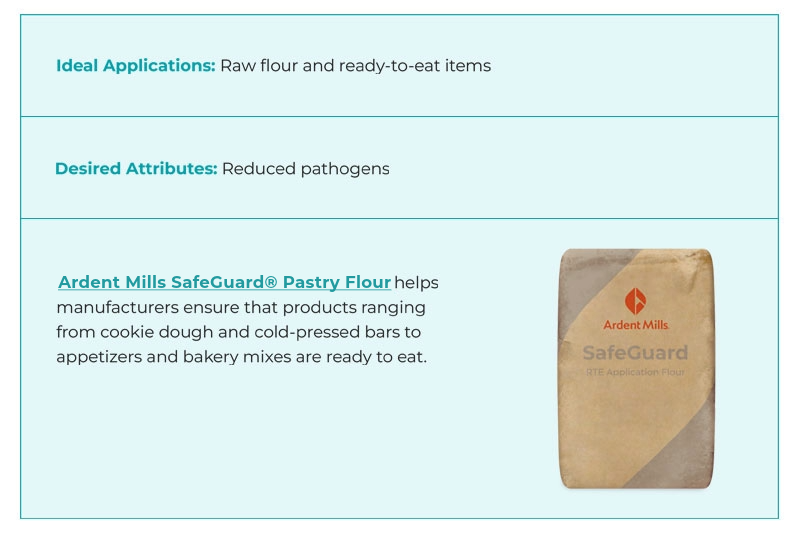
No brand wants to manage through a flour-related recall. The fallout to brand reputation and an organization's bottom line can be long-lasting. To help minimize this risk, heat treatments heat flour to reduce the levels of pathogens in ingredients like raw flour and ready-to-eat products like edible cookie dough.
Quality, taste, and appearance always win in the long run
Regardless of which flour treatments fit within your formulation strategies, there are measurable benefits to keep in mind:
- Improved baking quality through improved dough strength, elasticity, and fermentation.
- Enhanced texture, volume, and crumb structure.
- More reliable consistency regardless of seasonal or climate-related variations.
- Cost efficiencies from more flexible raw material sourcing and reduced reliance on specific grain qualities.
Consumer demand for baked goods is growing — and so is the competition. In a landscape that's becoming increasingly cluttered, it's important to check the boxes consumers care about the most: taste, quality and appearance.
The right strategy starts with a supply partner and ingredient expert that knows what flours will work best for your applications. Ardent Mills is actively partnering with customers to design flour treatment plans that meet evolving regulatory requirements, address consumer needs and provide the reliable performance you expect from your ingredients.
Fill out the contact form below or give us a call so we can review your organization's unique specifications and get to work designing a custom flower treatment plan that'll perform big after bake.
Let's continue the conversation
Ready to learn more about Ardent Mills?
Fill out the four below and we'll be in touch.